
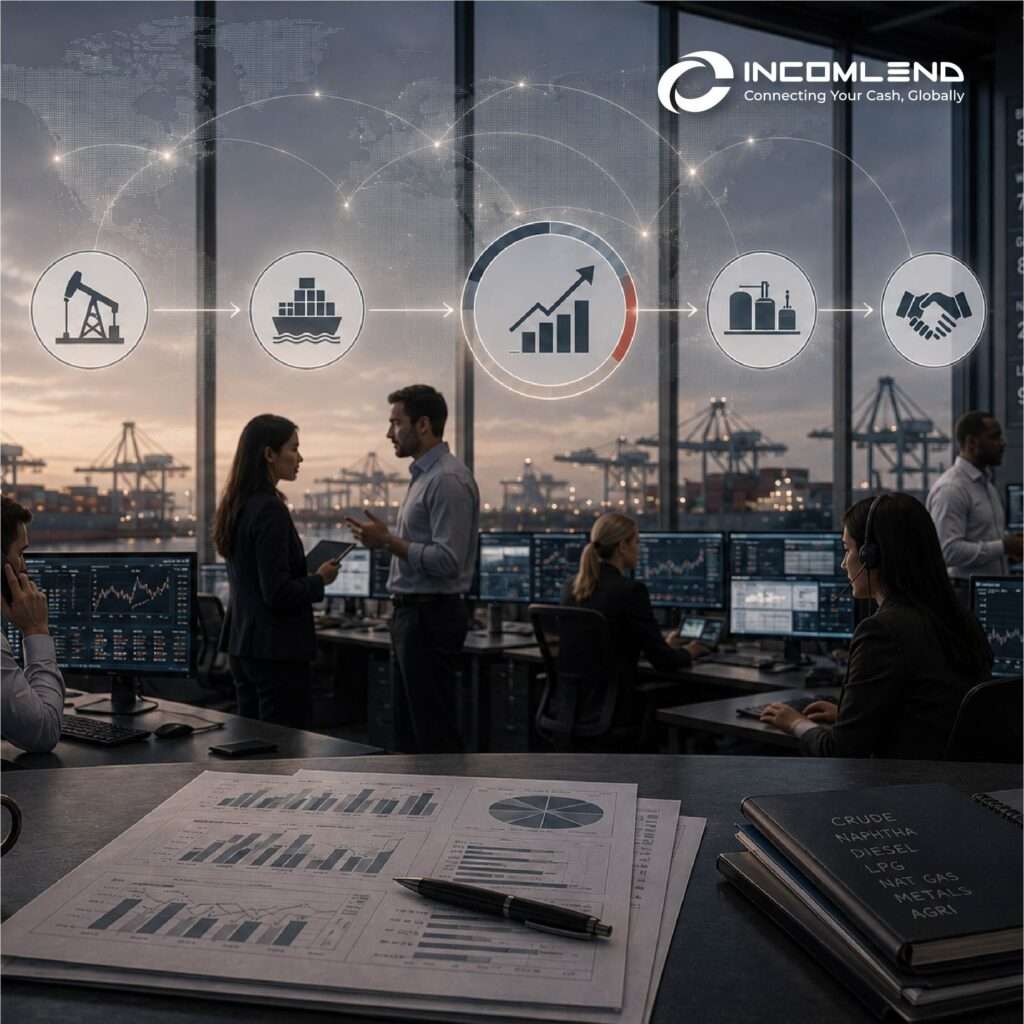
Many importers, exporters and CFOs still view commodity traders as intermediaries. The traditional picture is familiar: a trader buys from a producer, sells to an end buyer and earns a margin for connecting the two.
That picture is becoming increasingly outdated.
Commodity traders have evolved significantly over the past two decades. The largest players today resemble integrated supply chain platforms more than traditional brokers. They manage logistics networks, control inventory, secure alternative sourcing routes, deploy sophisticated market intelligence and often play a critical role in financing the movement of goods.
This transformation matters because financing decisions increasingly depend on the quality and capabilities of the trader involved. Businesses that continue evaluating traders through an outdated lens may underestimate risks, overestimate resilience or miss financing opportunities.
Why the traditional view no longer works
Global trade exceeded USD 35 trillion in 2025. Yet moving goods around the world has become significantly more complicated.
Over the past five years alone, businesses have had to navigate pandemic disruptions, the Red Sea shipping crisis, sanctions regimes, supply chain reconfiguration, geopolitical tensions and concerns around the Strait of Hormuz. Freight costs, transit times and insurance premiums have become more volatile, while companies face growing pressure to maintain supply chain continuity.
In this environment, access to goods is only part of the equation. The ability to move those goods efficiently, reroute them when disruptions occur and maintain liquidity throughout the transaction has become equally important.
This is where the role of the trader has changed.
Many traders now sit at the center of complex ecosystems involving suppliers, buyers, shipping companies, warehouses, banks, insurers and financing providers. Their value increasingly comes from coordinating and controlling these networks.
As a result, traders are becoming critical infrastructure within global commodity supply chains.
How modern traders create value
The strongest commodity traders increasingly differentiate themselves through operational capabilities rather than purely commercial ones.
Several characteristics stand out.
· Operational control creates resilience.
Traders with access to storage facilities, warehouses, shipping capacity and alternative logistics routes can often react faster when disruptions occur. During the Red Sea crisis, for example, traders with diversified transportation options were generally better positioned to maintain deliveries than competitors dependent on a single route. For buyers and suppliers, this operational flexibility can reduce disruption risk and improve transaction reliability.
· Diversification improves stability.
Traders operating across multiple commodities, geographies and supplier networks are typically less vulnerable to localized shocks. A drought affecting agricultural exports, a sanctions regime targeting a specific country or a disruption in a shipping corridor may significantly impact one business while leaving another relatively unaffected. Diversification often translates into greater resilience.
· Data has become a competitive advantage.
Leading traders increasingly rely on real-time information to monitor freight flows, inventory levels, pricing movements and geopolitical developments. Better visibility allows faster decision-making and more effective risk management. In volatile markets, the ability to identify emerging problems before competitors can have a direct financial impact.
These capabilities may not always be visible on a balance sheet, yet they often influence performance during periods of market stress.
Why financing decisions are changing
Historically, trade finance assessments focused heavily on contractual relationships.
Financiers primarily examined the buyer, the supplier and the payment terms. If these elements were acceptable, financing was often available.
But recent years have highlighted the limitations of this approach. A strong contract does not guarantee successful execution. Goods still need to be sourced, transported, stored and delivered. Supply chains can be disrupted by geopolitical events, logistics bottlenecks, sanctions or operational failures.
As a result, financing providers increasingly look beyond the contract itself. Today, risk assessments often include questions such as:
- Who controls the movement of goods?
- How diversified are sourcing routes?
- What visibility exists over inventory and logistics?
- How resilient is the trader’s operating model?
- How effectively can disruptions be managed?
Financing is becoming increasingly linked to control of flows rather than simply contractual rights.
This shift reflects a broader reality. In commodity markets, execution risk has become as important as credit risk.
How businesses should assess traders today
For importers and exporters, choosing a trader is no longer purely a commercial decision. It can directly influence financing availability, working capital efficiency and supply chain resilience.
Several factors deserve closer attention.
· Look beyond financial statements.
Balance sheets and credit reports remain important, but they provide only part of the picture. Operational capabilities increasingly determine how a trader performs during periods of disruption.
· Evaluate supply chain control.
Access to storage facilities, logistics networks and alternative sourcing routes can materially affect resilience. Traders with greater operational flexibility are often better equipped to maintain continuity when markets become volatile.
· Assess funding strength.
Traders supported by multiple banks, insurers and financing providers generally possess greater liquidity resilience than businesses dependent on a single source of capital.
· Demand transparency.
Visibility over shipments, inventory positions and transaction status benefits both commercial and financing decisions. Transparency often improves lender confidence and facilitates financing approvals.
These considerations are becoming increasingly relevant as trade flows become more complex and fragmented.
Practical financing implications
The changing role of traders has important implications for financing structures. Not all traders should be financed in the same way, because not all traders present the same risk profile.
For established traders with diversified operations, strong liquidity and robust operational controls, businesses may be comfortable using financing solutions such as factoring, receivables finance or longer open account payment terms. Stronger counterparties often support larger financing limits and more competitive pricing.
For smaller or less established traders, additional risk mitigation may be appropriate.
This may include:
- Credit insurance protection
- Shorter payment terms
- Enhanced transaction monitoring
- Lower concentration limits
- More structured financing arrangements
The objective is not to avoid emerging traders. Many growing trading companies offer attractive opportunities and access to new markets.
The objective is to align financing structures with actual risk rather than relying on assumptions.
A trader’s operational capabilities, liquidity profile and supply chain control should increasingly influence how financing is structured.
Conclusion
Commodity trading has undergone a profound transformation. Many of today’s leading traders combine logistics, market intelligence, financing access and operational expertise to keep goods moving through increasingly complex global supply chains.
For importers, exporters and CFOs, this evolution changes how counterparties should be evaluated and how financing decisions should be made.
Beyond contracts and financial statements, businesses should assess operational resilience, diversification, transparency and control over supply chain flows. These factors increasingly determine how a trader performs during periods of disruption and how financing providers assess risk.